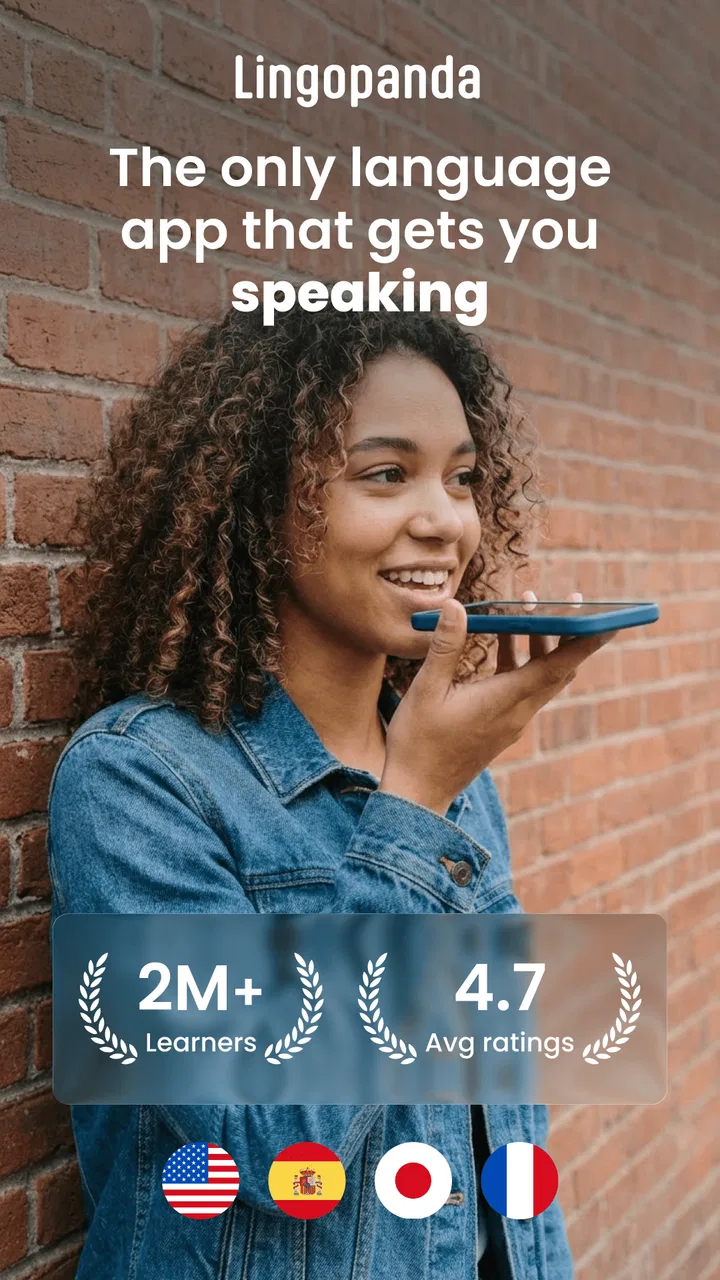
Lingopanda: Language Learning
- 4.5
- Rating
- 1.00M
- Installs
- Free
- Price

 Analysis by App-foxy
I approached Lingopanda: Language Learning as a practical decision rather than simply another language app to install and forget. It is an education app from Lingopanda, previously known as PingoLearn, focused on learning and speaking English or Spanish through native-speaker videos, quizzes, and an AI tutor. That combination makes it more interesting than a basic flashcard tool, but it also means the right choice depends heavily on how you like to study.
My first impression is that the app is aimed at people who want language practice to feel connected to real speech. Instead of treating vocabulary as isolated translations, it places video and listening at the center, then adds quizzes to check whether I actually understood what I watched. The AI tutor gives the experience a more interactive layer, although I would still treat it as a practice partner rather than a complete replacement for a teacher or conversation group.
The app is free to start, is suitable for Everyone, and has built a substantial audience with over one million installs and a 4.5 average from around 95 thousand ratings. Those numbers suggest that it has reached well beyond a small experimental audience. Still, popularity alone does not answer the important question: will it suit your learning habits better than a course, a flashcard app, a conversation service, or ordinary video lessons?
You May Also Like

 Blood Strike: 2.5 Anniversary
Blood Strike’s Loadouts Turn Every Drop Into a Tactical Gamble
A close look at Blood Strike’s custom loadouts: how fast access to signature weapons reshapes its battle royale rhythm, rewards preparation, and narrows the gap between fights.

 Pandora - Music & Podcasts
Pandora’s Music Is Easy to Start, but Harder to Recover
Pandora’s strength is its low-effort path from a seed to a station. Its weak spot is how much confidence it asks you to place in connection, setup, and quiet recovery.

 8 Ball Pool
 Is Built on Rivalries, Rematches, and Routine
A close look at the rivalries, rematches, shared routines, and unanswered safety questions that turn a quick pool match into a persistent mobile community.

 Samsung Music
’s Quiet Strength Is Playing What You Already Own
Its reach comes less from spectacle than from dependable access to a personal library. That simplicity is both the app’s strongest retention engine and its ceiling.

 AccuWeather: Weather Radar
AccuWeather Review: A Quick, Clear Forecast for Everyday Decisions
For everyday plans, the best forecast is the one you can understand quickly. AccuWeather makes rain timing, radar, and local conditions easy to act on, with a few trade-offs.

 Hill Climb Racing
Why Hill Climb Racing Still Turns Crashes Into One More Run
A tiny car, a bumpy hill and one more upgrade: Hill Climb Racing keeps resurfacing because its simple chaos makes every near-miss feel personal.
More From Our News Desk



How I would decide whether Lingopanda fits
I would judge whether Lingopanda fits by looking beyond the first few sessions: does its mix of video, quizzes, and AI practice make you return to the language in a useful way? I’d start with one recurring situation you want to handle more confidently, then see whether the app helps you prepare for it without turning study into a chore. That makes the choice less about novelty and more about your actual routine.
Choose according to the kind of practice you actually need
The most useful starting point is to identify your main weakness. If you can recognize written words but struggle when a native speaker talks at a natural pace, Lingopanda’s video-based approach is immediately relevant. If your problem is remembering basic vocabulary, quizzes and repeated exposure may help. If you already understand a lot but freeze when forming a response, the AI tutor offers a low-pressure place to rehearse.
Those are different needs, and I would not expect one activity to solve all of them equally well. Video can improve listening context, but watching alone is passive. Quizzes can reveal gaps, but a correct multiple-choice answer is not the same as producing a sentence. An AI conversation can reduce hesitation, but it does not recreate every interruption, accent, or social cue found in a real exchange. The app works best when I use each part for its proper job.
I would also consider whether you are learning English or Spanish specifically. The app is built around those two languages, so it is a focused choice rather than a broad catalog for someone who wants to jump among many languages. That focus can be helpful because the learning path is less distracting, but it is an obvious reason to look elsewhere if your target language is different.
A realistic daily routine
Imagine that I have a busy weekday and only a short window after breakfast. I could watch a brief native-speaker video with headphones, pause when a phrase sounds unfamiliar, and then use the quiz to check whether I understood the meaning rather than merely recognizing a few words. Later, during a commute or quiet break, I could return to the same topic and ask the AI tutor to help me build responses around it.
The important detail is returning to the same material with a different task. Watching once is useful for exposure, while answering questions checks comprehension and producing language tests recall. I would keep a small personal list of phrases that repeatedly cause trouble, but I would avoid turning the session into a long note-taking exercise. The app is more valuable when it keeps me listening and responding instead of encouraging endless collecting.
For a beginner, I would use the video as a source of familiar sounds and everyday patterns, then rely on the quiz to identify what needs another pass. For an intermediate learner, I would spend less time translating every word and more time trying to summarize the video in my own language target. That change in workflow matters: the same content can serve different levels if I adjust what I ask myself to do with it.
What makes its learning design stand out
The strongest part of the experience is the connection between authentic-sounding input and active checking. Many language apps make progress feel like moving through tiny exercises, while ordinary online videos often leave me unsure whether I truly understood anything. Lingopanda sits between those approaches. It gives the video a learning purpose and gives the quiz a context.
The AI tutor is another meaningful distinction. I can use it when I want to test a phrase without the embarrassment of making a mistake in front of another person. That is especially useful for learners who know the grammar in theory but hesitate to speak. I would use the tutor to try several versions of the same idea, notice where I become uncertain, and then revisit the relevant vocabulary or video.
The hidden advantage is the handoff between listening, checking, and producing. If I move through those steps deliberately, the app becomes more than a collection of videos. I am not just asking whether I enjoyed the lesson; I am checking whether I can recognize the phrase, understand it in context, and use it myself.
Practical tips that make the app more effective
My first tip is to resist the urge to watch every video at full speed without interaction. When a sentence is useful, I would replay it, say it aloud, and then try to express the same idea differently. This turns native-speaker material into speaking practice. Even if the app does not make me repeat every line, I can create that extra step myself.
My second tip is to take quizzes as diagnosis rather than judgment. A wrong answer tells me that something needs attention, but immediately rushing to memorize the correct option can produce a shallow result. I would pause and ask whether the problem was vocabulary, speed, pronunciation, or the meaning of the whole sentence. That distinction helps me choose what to do next.
My third tip is to give the AI tutor a narrow assignment. Instead of asking for an unlimited conversation, I would practice one situation at a time, such as introducing myself, describing a recent activity, or asking for clarification. Focused prompts make it easier to notice repeated mistakes and less likely that I will drift into vague conversation that feels pleasant but teaches little.
A fourth useful habit is to alternate recognition and recall. On the first pass, I might concentrate on understanding the speaker. On the next, I would hide the translation or avoid looking back and attempt to restate the message. That extra effort is uncomfortable, but it reveals whether the phrase is becoming usable knowledge or merely familiar text on a screen.
Where Lingopanda wins, and where another route may be better
For me, Lingopanda’s edge is the guided bridge from listening to trying a response, while another route may be stronger for structured grammar, detailed human correction, or a language beyond English and Spanish. I’d choose based on the gap I need to close now, not on which tool seems most complete in the abstract. The practical comparison is whether I need an easy rehearsal space or a more personal, specialized learning plan.
Why I would pick it over a basic vocabulary app
Flashcard-focused apps are excellent when I need quick repetition and a clear list of words. They are often easier to use in very short bursts, and they can be a good companion for building a foundation. However, isolated vocabulary does not always prepare me for connected speech. Lingopanda has the stronger case when my main question is, “Can I follow what people actually say?” rather than, “Can I remember this translation?”
The video context also helps me understand how an expression feels in use. A word can have several meanings, and a short clip may show the tone or situation that a single flashcard cannot. I would still want deliberate vocabulary review if I were starting from zero, but I would prefer this app when my study has become too detached from real listening.
Why it may be preferable to ordinary video platforms
Free video platforms offer enormous variety, but they place the responsibility for course design entirely on me. I have to find suitable material, judge its difficulty, decide what to review, and create my own tests. That flexibility is valuable for experienced learners, yet it can also lead to passive watching and inconsistent progress.
Lingopanda’s appeal is the learning frame around the content. The quiz gives me an immediate check, and the AI tutor gives me somewhere to turn input into output. I would choose ordinary video platforms when I want a very specific subject, a particular accent, or long-form explanations. I would choose this app when I want less setup and a more direct path from viewing to practice.
Where a teacher, class, or conversation service still wins
A human teacher can notice patterns that an automated tool may miss, explain why a sentence sounds unnatural, and adapt a lesson to my personal goals. A live conversation partner adds timing, emotional nuance, and the need to respond when I am not fully prepared. If I need formal writing correction, professional presentation practice, or preparation for a high-stakes exam, I would not rely on Lingopanda alone.
The AI tutor is most useful as a private rehearsal space. It can lower the barrier to speaking, but I would eventually test those skills with real people. Someone who only practices with a predictable digital partner may feel prepared and then struggle with interruptions or unfamiliar phrasing. That is not a reason to avoid the app; it is a reason to place it inside a wider routine.
Who should skip it
I would skip Lingopanda if I am looking for a full classroom replacement, a language outside English or Spanish, or a purely grammar-centered course with extensive written explanations. I would also hesitate if I dislike video learning or know that I will never speak aloud. The app’s main strengths depend on engaging with listening and production, not just tapping through questions.
It may also be a poor match for someone who wants a completely rigid curriculum with every lesson mapped to a formal level and a fixed academic sequence. The video-and-practice format feels more flexible and practical than textbook-like. That is liberating for some learners, but frustrating for anyone who wants a traditional syllabus and detailed teacher feedback at every stage.
Understanding the free starting point and paid decisions
The app can be used free of charge, which makes it easy to test the learning style before making a commitment. In-app purchases range from $6.99 to $99.99 per item, so I would pay attention to what is available in the version I am using and whether the paid material matches my actual routine. I would not upgrade simply because I had completed a few enjoyable sessions.
My approach would be to use the free experience long enough to answer practical questions: Do I return to the videos? Do the quizzes expose useful gaps? Do I actually speak with the AI tutor, or do I skip that part? If those activities become a regular habit, paid access may make sense. If I only open the app occasionally, keeping the free option or choosing a different study format is more sensible.
The current version is 3.8.3, and the app requires at least OS 10. That matters when deciding whether an older phone or tablet can handle it. I would check compatibility before planning a study routine around it, particularly if the device is shared or no longer receives regular system updates.
The real cost of switching from another method
Moving from flashcards to Lingopanda is not just changing icons on a home screen. I would be changing from word recall to a mixture of listening, comprehension, and speaking. At first, progress might feel slower because understanding a video is more demanding than recognizing a familiar card. That temporary discomfort should not be mistaken for poor learning; it may simply reflect a more realistic task.
Switching from ordinary videos can be easier because the app supplies a clearer next step. The trade-off is reduced freedom: I may not find content about every subject I care about, and I may need to accept the app’s chosen structure. Switching away from a teacher is more complicated. I would lose personal correction and accountability, so I would need to replace those with a schedule and honest self-review.
I would keep my existing method during the transition rather than abandoning it overnight. For example, I could use Lingopanda for listening and speaking practice while retaining a small vocabulary review. After a couple of weeks, I would judge progress by concrete behavior: Can I understand more of a clip without translating? Can I answer the tutor with less hesitation? Can I reuse a phrase in a new situation? Those tests are more meaningful than simply counting completed sessions.
My recommendation for different learners
For a beginner in English or Spanish who wants a friendly entry point, I think Lingopanda is worth trying. I would combine it with basic pronunciation work and a simple way to review essential words, because videos and quizzes alone may not cover every foundation equally. Used consistently, it can make early listening feel less intimidating.
For an intermediate learner, I see an even clearer use. The app can fill the gap between understanding lessons and actually responding. I would focus on summarizing videos, asking the AI tutor targeted questions, and revisiting phrases that I fail to produce naturally. This is where the format feels more valuable than another round of beginner drills.
For an advanced learner, the decision is more conditional. The app may provide convenient speaking rehearsal and accessible listening, but I would want challenging conversations, specialized vocabulary, and detailed correction as well. A teacher, advanced media, or real conversation group may offer more growth once the basics are already comfortable.
Lingopanda is a free education app for Everyone, developed by Lingopanda, formerly PingoLearn, and its strong user response shows that the concept has broad appeal. My recommendation is not based on the rating alone, though. I would choose it because it connects native-speaker video with quizzes and an AI tutor in a way that encourages a useful progression from hearing to understanding to responding.
My clear advice is to try it if your priority is practical listening and low-pressure speaking practice in English or Spanish. Give it a fair test by using the videos actively, treating quizzes as diagnostics, and setting focused tasks for the AI tutor. If you need formal instruction, extensive human correction, another target language, or a tightly academic course, a different option will probably serve you better. For everyone in between, it is a sensible tool to add to a balanced routine rather than a promise to replace every other form of language learning.
FAQs for Lingopanda: Language Learning
01What is Lingopanda: Language Learning, and who is it designed for?
Lingopanda: Language Learning is a mobile app designed to help users study and practice a new language through short, accessible lessons. It can be useful for beginners who want to build basic vocabulary and everyday phrases, as well as more experienced learners looking for regular revision. The app is best suited to people who prefer learning in brief sessions rather than following long, traditional textbook-style courses.
02Which languages can I learn with Lingopanda?
The available language choices may depend on the version of Lingopanda, your device, and the app’s current content library. Before downloading, it is worth checking the language list shown on the official Google Play Store or Apple App Store page. This is especially important if you are looking for a less commonly taught language, since not every course or feature may be available for every language pair.
03Does Lingopanda offer lessons for complete beginners?
Yes, Lingopanda is intended to be approachable for learners starting from the basics. Its bite-sized activities can help introduce common words, expressions, and language patterns without requiring prior knowledge. However, users should not expect a single app to replace complete immersion, conversation practice, or a structured classroom course. Consistent daily use, listening practice, and real communication will still be important for making meaningful progress.
04Is Lingopanda free to use, or does it require a subscription?
Lingopanda may provide free access to some learning material while reserving additional lessons, features, or content for in-app purchases or a subscription. The exact pricing, trial conditions, and available plans can change, so review the current store listing before signing up. If a free trial is offered, check its renewal terms carefully and cancel it through your device’s subscription settings if you do not want to continue.
05Can I use Lingopanda without an internet connection?
Offline availability depends on the app’s current features and the specific lessons you have downloaded. Some language-learning apps require an internet connection for account access, progress synchronization, audio, or interactive exercises, while others allow selected content to be saved for later use. If offline study is important to you, test the download options after installation and confirm whether all essential activities remain accessible without mobile data or Wi-Fi.
Pros
- Short lessons make it easy to study during spare moments.
- Covers useful everyday vocabulary for practical communication.
- Interactive exercises help reinforce new words and phrases.
- Progress tracking makes regular study habits easier to maintain.
- Suitable for beginners looking for a simple learning experience.
Cons
- Advanced learners may find the content too limited.
- Some features may require a paid subscription.
- Practice can feel repetitive after extended use.
- Speaking feedback may not be as detailed as dedicated language apps.
- An internet connection may be needed for certain lessons or features.

Lingopanda: Language Learning
Gallery